Tailored to your property.
Scaffold hire periods to suit your project.
London, Surrey, Sussex, Hampshire, Berkshire & Kent.
Provided where required.
Some building projects require temporary support while structural repairs or alterations are carried out. Mays Scaffolding installs temporary support scaffolds across London and the South East, including structures used to support building elements during carefully planned construction and refurbishment work. We establish scaffold requirements based on the loads involved, the building’s condition, and any necessary structural design. Our previous support scaffolding projects below include photographs, installation details and actual costs. Call 020 3951 6014 for a free quotation.
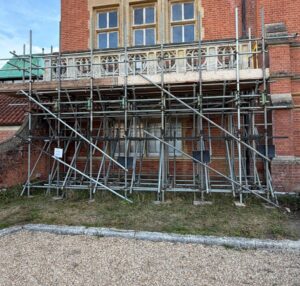
See examples of temporary support scaffolds we have installed for damaged, vulnerable and structurally sensitive buildings.
Temporary support scaffolding is used where part of a building or structure needs to be supported, braced or restrained, rather than simply accessed for work.
This may be required when a wall becomes unstable, a balcony needs supporting, a building has suffered impact damage, or an existing structure needs additional support while repairs or alterations are planned.
We provide temporary support scaffolds for residential properties, commercial buildings, construction sites and existing structures. Depending on the circumstances and design requirements, this can include shoring scaffolds, raking shores and other designed scaffold support structures.
Temporary support may be required for:
The required scaffold will depend on the condition of the existing structure, what needs support, and the loads and forces involved.
Structural problems are not always discovered during planned building work.
A vehicle can strike a wall, masonry can become loose, part of a building can deteriorate unexpectedly, or an inspection may identify an element that requires urgent support.
Where an engineer, surveyor, contractor or other responsible professional has identified the need for temporary support, we can discuss the situation and the urgency of the scaffold installation.
For an emergency enquiry, send us photographs, the property address, and any structural engineer’s reports, drawings, or other available information. This gives us a clearer understanding of the problem and what needs to happen next.
Depending on the condition of the structure, access to the affected area may need to remain restricted while we assess, design, and install the appropriate temporary works.

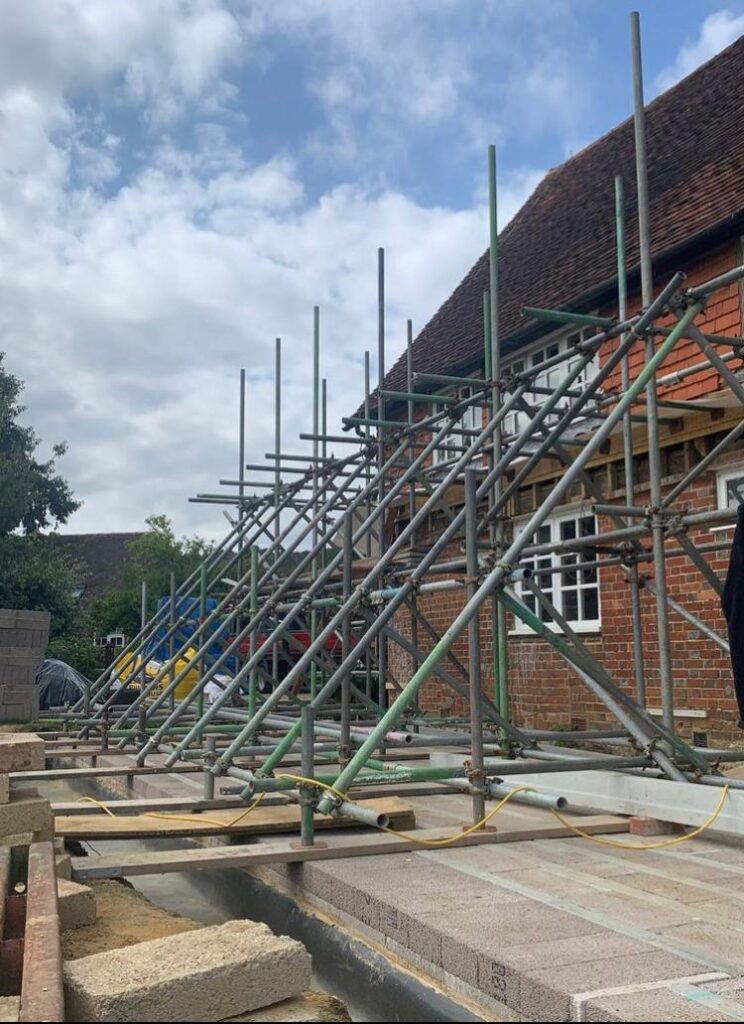
Raking shores can be used where a wall, façade or other part of a structure requires lateral support or restraint.
The rakers run diagonally between the structure being supported and suitable bearing points, forming part of a designed arrangement that transfers the specified forces away from the vulnerable structure.
This may be required where a wall has suffered structural movement, impact damage or deterioration, or during building work where temporary lateral support has been specified.
Scaffold shoring can also be designed for situations where support is required beneath or around part of a structure. This can involve more substantial arrangements of scaffold tube, fittings and bracing depending on the loads involved.
The position of the rakers, bracing, connections and bearing points needs to be established for the particular project rather than determined on site by simply adding additional scaffold components.
Walls can become unstable for several reasons, including deterioration, cracking, movement, impact damage, alterations to the building, or failure elsewhere in the structure.
In some circumstances, raking shores or scaffold shoring may be specified to temporarily restrain the wall while its condition is investigated or permanent repairs are arranged.
The support arrangement depends on the forces that need to be controlled and where those forces can safely be transferred.
Depending on the design, the scaffold may incorporate rakers, standards, ledgers, bracing, ties, buttresses and other components to create the required temporary support.
Where a wall forms part of an occupied building or is close to a pavement, road, neighbouring property or other frequently used area, additional measures may also be necessary while the structural problem is dealt with.
Cars, vans, lorries and other vehicles can cause significant structural damage when they strike buildings, walls or other structures.
The visible damage does not always indicate the full extent of the problem. Brickwork can move, sections of a wall may become unstable, and you may need to consider loads previously carried through the damaged area.
Temporary shoring or a support scaffold may be required while the structure is assessed and before damaged sections are repaired or rebuilt.
These projects can involve homeowners, commercial property owners, structural engineers, loss adjusters, insurers and building contractors.
We can work with the relevant parties and install the required temporary support once the structural and scaffold design requirements have been established.
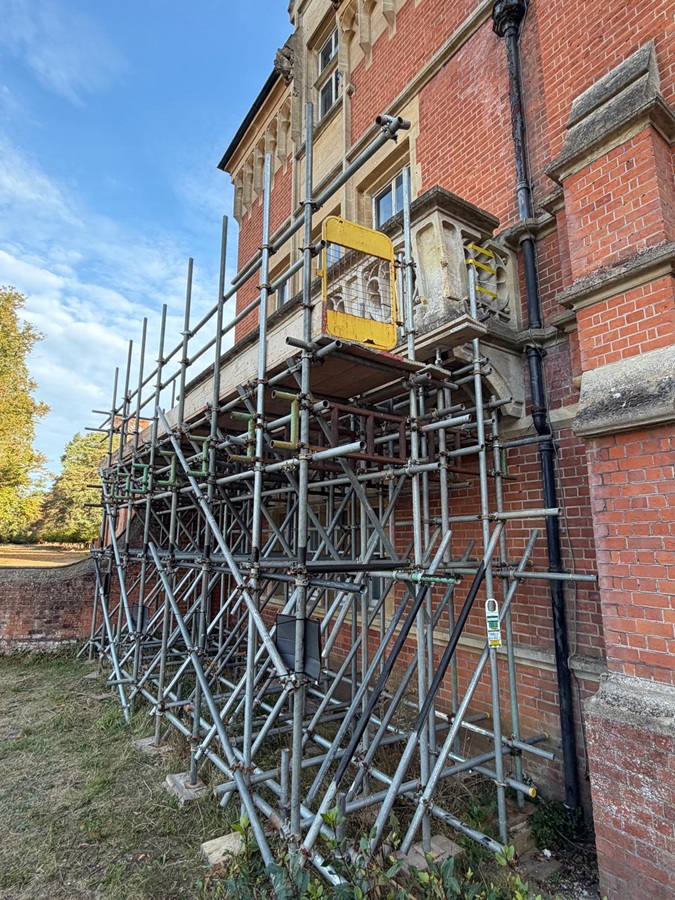
Balconies can require temporary support when deterioration, cracking or structural movement raises concerns about their condition.
This is particularly important with stone, concrete, and other substantial balconies, where considerable weight may need to be temporarily supported while investigations or repairs take place.
The support scaffold beneath the balcony needs to be designed around the loads involved and the available bearing points below.
Where required, our scaffolders can install access scaffolds and working platforms so contractors can reach the balcony for inspections, stonework repairs, balustrade work or other remedial work.
Older buildings can present very different temporary support requirements than modern structures.
Stone balconies, parapets, façades, decorative masonry and other original features may require support when deterioration is discovered or conservation work is planned.
This is particularly important on listed buildings, where the existing fabric may need to be retained and repaired rather than removed and replaced.
Temporary works may need to support considerable weight while avoiding unnecessary interference with historic materials.
We can work from information provided by structural engineers, conservation specialists, surveyors and contractors to install the specified support or shoring scaffold.
Where repairs are being carried out at the same time, suitable working platforms can also be incorporated into the design where required.
Not every support scaffold is required because a building has been damaged.
Temporary shoring can also form part of planned construction scaffolding requirements, particularly during building refurbishment or structural alteration work.
Removing or changing an existing structural element can change how loads are carried through a building. Temporary support may therefore be required before removing, repairing, or replacing particular parts.
This can arise during:
The sequence can be particularly important on this type of project. Temporary supports may need to be installed before alterations begin and remain in place until the permanent structure can carry the required loads.
Where scaffolding is being used to support, brace or restrain part of a structure, the loads involved and how they will be transferred need to be established.
A structural engineer may assess the existing building and identify what requires support and the loads involved.
Once the loads and support requirements are understood, the appropriate scaffold design can establish the required configuration, bracing, connections, and bearing points.
We can work from the relevant drawings and technical information to install the scaffold in accordance with the specified arrangement.
If an engineer is already involved, send us their report, drawings, calculations and photographs with your enquiry. This can help establish scaffold requirements early.
Temporary support scaffolds may be required after a vehicle impact, fire, storm damage, structural movement, or another incident that has left part of a property unstable or vulnerable.
Insurance projects can involve the property owner, insurer, loss adjuster, structural engineer and contractor carrying out the permanent repairs. We can provide a scaffold quotation setting out the installation, initial hire period and any design requirements that apply.
Some support scaffolds remain in position while surveys, approvals and permanent repairs are arranged. If this takes longer than the original hire period, we can arrange continued hire.
Where the scaffold provides structural support, it must be removed at the appropriate stage once that support is no longer required.
When part of a building is believed to be unstable, access to the affected area may need to be restricted while its condition is assessed and the necessary temporary works are arranged.
Depending on the circumstances, this can involve barriers, exclusion zones, or access restrictions to prevent people from entering the affected area.
A conventional access scaffold should not be assumed to provide structural support simply because it is positioned against a damaged wall or building. If scaffolding is required to support or restrain a structure, it must be specifically designed and installed for that purpose.
The support scaffold must also be inspected and maintained while in use.
There is no standard price for temporary support scaffolding because the requirements can vary considerably.
The cost can be affected by:
A support scaffold beneath a balcony will have very different requirements from a substantial raking shore arrangement supporting an unstable wall or façade.
Send us photographs, the property location and any available engineer’s information, and we can establish what is required before providing a quotation.
Temporary support scaffolding is a scaffold structure designed to support, brace, shore or restrain a building or part of a structure for a limited period.
It may be required after structural damage, while repairs are arranged, or during construction and alteration work where temporary support is needed.
Raking shores are inclined supports used to provide temporary lateral support to a wall or other structure.
With scaffold raking shores, tubes and fittings can form a designed braced arrangement between the structure and suitable bearing points. The number, position and configuration of the rakers depend on the loads and structural requirements of the individual project.
A shoring scaffold is a temporary structure designed to provide support or restraint, not just access.
Shoring arrangements can support walls, façades, balconies, and other structural elements while their condition is assessed, alterations are carried out, or permanent repairs are completed.
Support and shoring scaffolds will normally require a bespoke scaffold or temporary works design.
The design establishes how the structure should be configured to deal with the loads and forces identified for the project.
Yes. We can handle urgent enquiries when a wall, balcony, or another part of a building has been identified as needing temporary support.
Send us photographs, the property address and any engineer’s information you already have so we can establish what is required and discuss the next stage.
Yes. Where a structure has been damaged by vehicle impact, a specifically designed support or shoring scaffold can provide temporary support or restraint where required.
The condition of the damaged structure and the loads involved first need to be established so that the appropriate support arrangement can be designed.
Yes. We can install temporary support scaffolding beneath balconies where structural support has been specified.
The arrangement will depend on the balcony’s construction, weight, condition, height and the available bearing points beneath it.
Not necessarily. You can contact us as soon as you identify the problem.
However, if scaffolding is required to support part of a building, we may need structural information before we can design and install the final support arrangement.
If an engineer is already involved, send us their report, drawings, or other relevant information with your enquiry, or we can provide our own engineer if needed.
Yes. We can provide temporary support and shoring scaffolds on listed and historic buildings where vulnerable structural or architectural elements require support.
These projects may involve structural engineers, conservation specialists and other contractors, with the scaffold installed to the agreed temporary works design.
Working platforms can be incorporated where required and allowed for within the scaffold design.
This can provide access for inspection and repair work while maintaining separate structural support requirements.
The hire period depends on the project.
Some support structures may only be required during relatively short repairs, while scaffolds associated with insurance claims, structural investigations or listed buildings can remain in position for much longer.
The scaffold must remain appropriately inspected and maintained while in use.
We coordinate removal with those responsible for the structural or temporary works requirements.
Where scaffolding supports or restrains part of a building, it should remain in position until the permanent work reaches the stage where that temporary support is no longer required.
If you have an unstable wall, damaged balcony or another structure that needs supporting, send us the property address, photographs and any drawings or information you already have.
We can discuss what is required and provide a quotation for the appropriate temporary support scaffold.